Part 2 | Getting Up the Aisle: Planning Your Wedding Processional & Recessional
Before we begin
If you've never planned a wedding ceremony before, you're suddenly expected to make a surprising number of decisions, often without understanding why people choose one option over another.
This series isn't about telling you the "right" way to do things. It's about giving you the context behind each decision so you can create a ceremony that feels intentional, practical, and reflective of the two of you.
These articles are written for couples planning a non-denominational ceremony with a friend, family member, celebrant, or other independent officiant. If you're getting married in a church, synagogue, mosque, temple, or another house of worship, many of these decisions may already be guided by your officiant or faith tradition. That's completely normal. Think of this series as a guide for the decisions that are yours to make.
Getting Up the Aisle
Now that you've decided where everyone will stand and sit, it's time to figure out how they'll get there and how they’ll leave.
This is called your processional (everyone's entrance) and recessional (everyone's exit).
If you've ever searched for processional orders online, you've probably found dozens of diagrams that all seem slightly different. That's because, just like ceremony placement, there isn't one universally "correct" order.
Instead, think of your processional as the opening chapter of your ceremony. It welcomes the people who matter most, builds anticipation for your entrance, and sets the tone for everything that's about to follow.
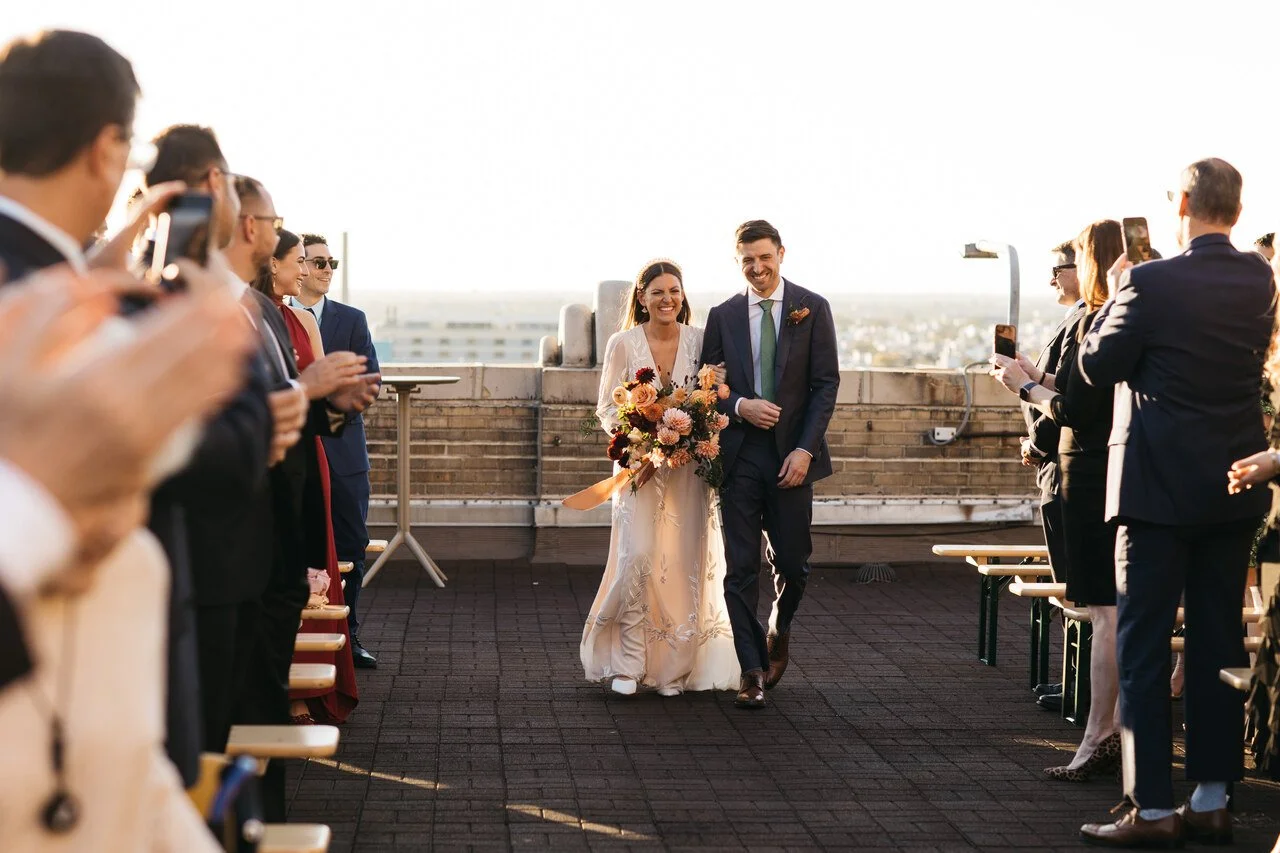
Photo by Peach Plum Pear Photography
What is a Processional?
A processional is the entrance at the beginning of your ceremony, while the recessional is the exit after you're officially married.
While those definitions are simple enough, the processional serves a much bigger purpose than simply getting everyone to the front.
It marks the beginning of your ceremony, introduces the people who'll be standing with you, and builds anticipation for one of the most memorable moments of the day: the moment you and your partner enter.
There are traditions that many couples choose to follow, but there's no single "correct" processional order. Whether you're planning a traditional ceremony, something completely modern, or a blend of multiple cultures or family traditions, your processional should feel intentional and authentic to the two of you.
Before deciding who walks when, there are a handful of questions worth thinking through. Once you've answered those, your processional order tends to come together naturally.
Planning Your Processional
Most processional decisions come down to five simple questions. Once you've answered them, the rest of your entrance order will start to fall into place.
1) Who will be included in the processional?
Will grandparents, parents, stepparents, siblings, or other important people be part of the processional, or would you prefer they already be seated before the ceremony begins?
Not everyone who has a place of honor needs to walk down the aisle.
2) How will each partner enter?
Will you walk with a parent, both parents, another loved one, on your own, or even together?
3) How will your wedding party enter?
Will your attendants walk individually or in pairs? Do you have children participating in the ceremony?
4) Does anyone have mobility or accessibility considerations?
Some venues, aisles, or participants may benefit from a slightly different approach to make everyone feel comfortable.
Comfort should always take priority over tradition.
5) Are there any family dynamics to consider?
Divorced parents, blended families, strained relationships, or other unique situations may influence who walks with whom — or whether certain people enter separately.
The goal isn't to follow tradition perfectly. It's to create an entrance that feels respectful and comfortable for everyone involved.
The rest of this guide walks through each of these decisions, along with the most common options couples choose.
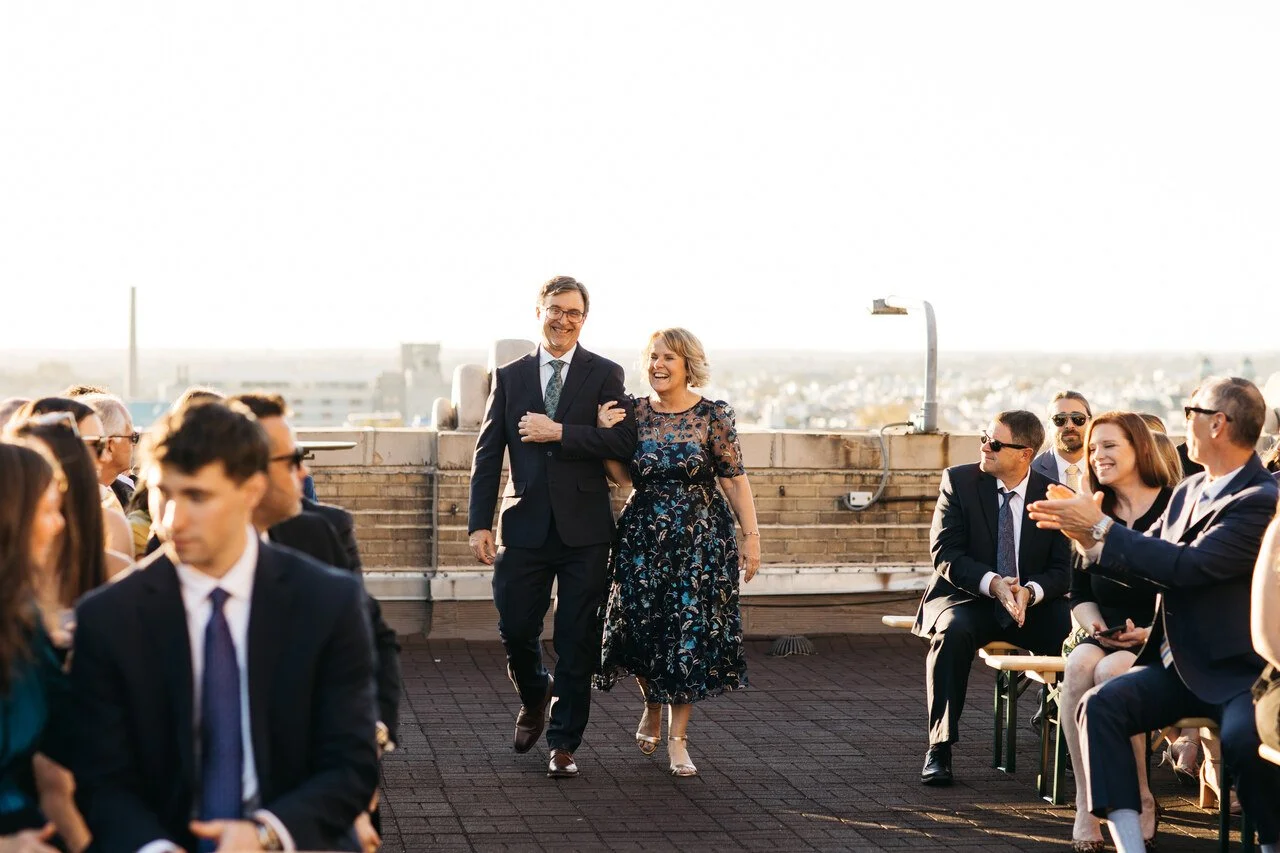
Photo by Peach Plum Pear Photography
Family & VIPs
Before your wedding party begins walking down the aisle, many couples choose to include parents, grandparents, stepparents, siblings, or other important people in the processional. Others prefer to have some or all of those guests seated before the ceremony begins.
There's no right answer. It simply depends on which people you'd like to recognize as part of the ceremony itself.
Grandparents
If you'd like to include grandparents in the processional, consider the amount of time they may spend standing and waiting before they ever reach the aisle. Depending on the size of your wedding party and where everyone gathers beforehand, that wait can be longer than expected.
Make sure they're comfortable with both the walk and the time spent standing beforehand. Having a chair nearby while they wait can make the experience much more comfortable. And if walking down the aisle, navigating the ceremony space, or waiting in the processional lineup would be difficult, they can absolutely be seated before the ceremony begins instead.
Being seated early doesn't make their role any less meaningful. It simply allows them to enjoy the ceremony comfortably.
Parents
Parents and stepparents are also commonly included near the beginning of the processional. Every family looks different, so there isn't one arrangement that works for everyone. Parents may walk individually, with a spouse or partner, with another family member, or with one of your siblings.
When building this part of your processional, don't include any parent who will be walking down the aisle later with one of the partners. Their entrance will happen at that point instead.
For blended families, focus less on creating a perfectly traditional order and more on making sure the plan reflects your relationships and feels comfortable for everyone involved.
“Whose parents go first?”
In a bride-and-groom ceremony, the groom's parents are seated first, followed by the bride's parents.
If your ceremony isn't following that tradition, or doesn’t include a bride and groom, simply choose an order that feels the most meaningful for your families.
Wedding Party
Your wedding party can enter individually, in pairs, or in separate groups. The best approach depends on your ceremony style, wedding party, and where everyone will stand once they reach the front.
If your wedding party will stand during the ceremony, their processional order is usually determined by where they’ll end up. The attendants standing furthest from the couple enter first, filling in from the outside toward the center.
That means the Maid of Honor, Best Man, Person of Honor, or closest attendant is typically the last person from their side of the wedding party to enter and ultimately stands closest to their partner.
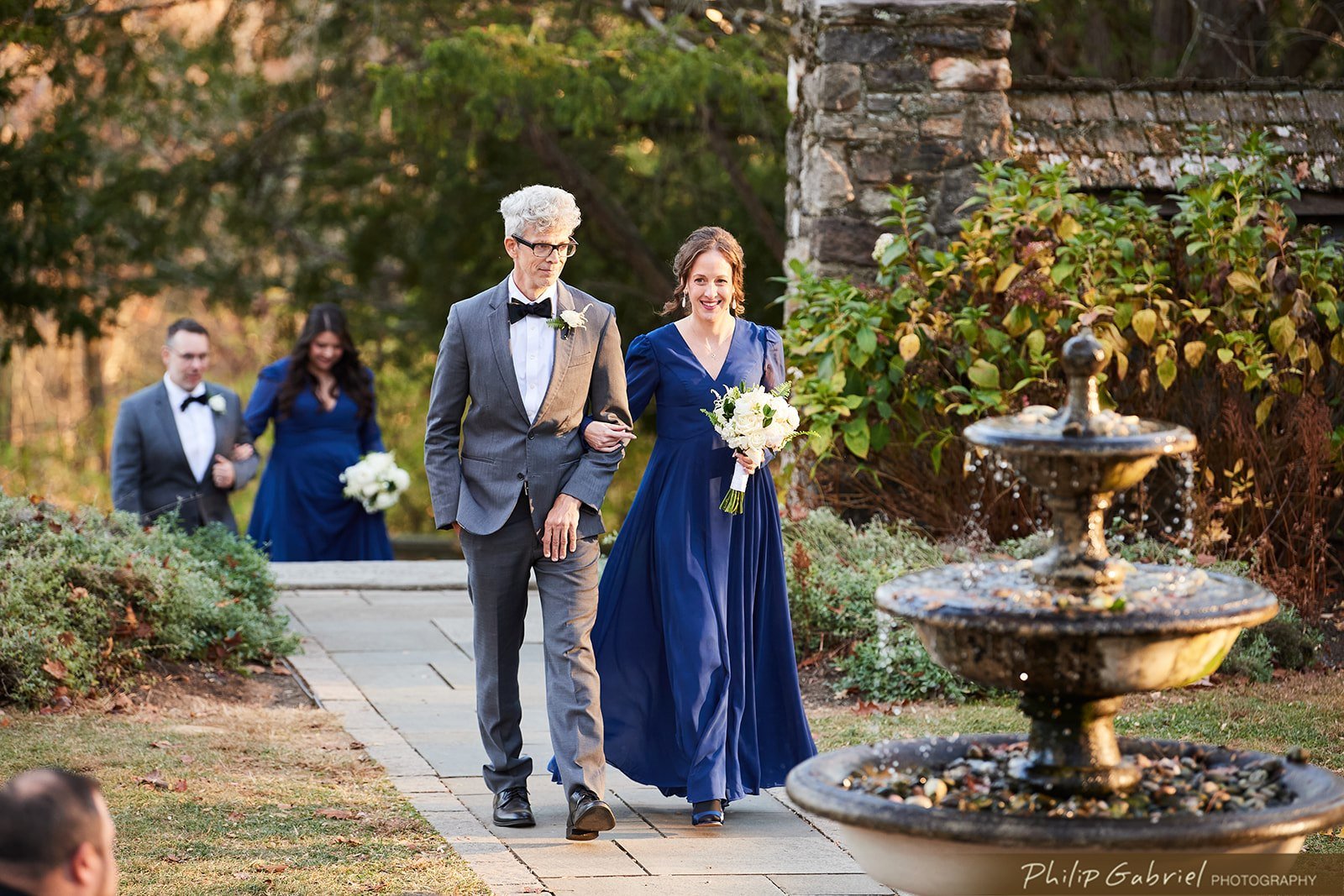
Photo by Philip Gabriel Photography
Walking Individually
Having attendants enter individually gives each person their own moment and makes the processional a little longer.
In bride-and-groom ceremonies with bridesmaids and groomsmen, the groomsmen often enter together in a single line, sometimes alongside or immediately before the groom (if they aren’t entering separately with a parent or another loved one). The bridesmaids then walk individually, with space between each person, and the Maid of Honor enters last, before the bride.
Individual entrances are also a natural fit for mixed-gender wedding parties, uneven numbers, or attendants who may not know one another well.
Walking in Pairs
Walking in pairs creates a coordinated processional and helps a larger wedding party reach the front more quickly.
The pairs should be based on where they’re standing for the ceremony, if possible. Pairing people according to their relationships, comfort, or whatever arrangement makes the most sense is best.
“What if our wedding party is uneven?”
That's completely fine. One person can walk individually, two attendants can walk with one person, or the entire wedding party can enter solo.
Your guests won't be counting. They'll simply be watching the people you chose to stand beside you.
Children in the Wedding Party
Children can enter at several points in the processional. Their age, maturity, and comfort level should help determine both when and how they walk.
Flower children, ring bearers, and other young attendants often create some of the most memorable moments of a ceremony — partly because they don’t always follow the plan.
Depending on their comfort level, children can walk individually, together, with an older child, or alongside a trusted adult. There’s no need to pressure them to walk alone if having someone beside them makes the experience easier.
For children younger than about seven or eight, I typically recommend having them enter before the final wedding party attendant (or even all of the wedding party) rather than immediately before a partner. If they become nervous, stop in the aisle, turn around, or need help, having a calm buffer — like a Maid of Honor — gives everyone a little breathing room before the final entrance.
An older or particularly comfortable child may be perfectly happy walking immediately before a partner. This is less about choosing the “correct” order and more about knowing the child involved.
Once they reach the front, younger children often sit with a parent or another familiar adult rather than standing with the wedding party for the entire ceremony. Make sure that person knows the plan in advance and has a seat that’s easy for the child to see and reach.
“What if they don’t make it down the aisle?”
That’s okay. Have a trusted adult nearby who can walk with them, carry them, or guide them to their seat. If they decide not to participate at all, the processional can simply continue.
Their role should feel fun — not like a performance they have to get right.
And the more stress they feel from the adults about “getting it right”, the worse it can become for everyone.
How Will Each Partner Enter?
The short answer: Each partner can walk alone, be escorted by someone meaningful, enter with the other partner, or already be waiting at the front. Your entrances don’t need to match, but both should feel intentional.
This is one of the most personal processional decisions you'll make. There are plenty of common approaches, but no single arrangement is inherently more meaningful than another.
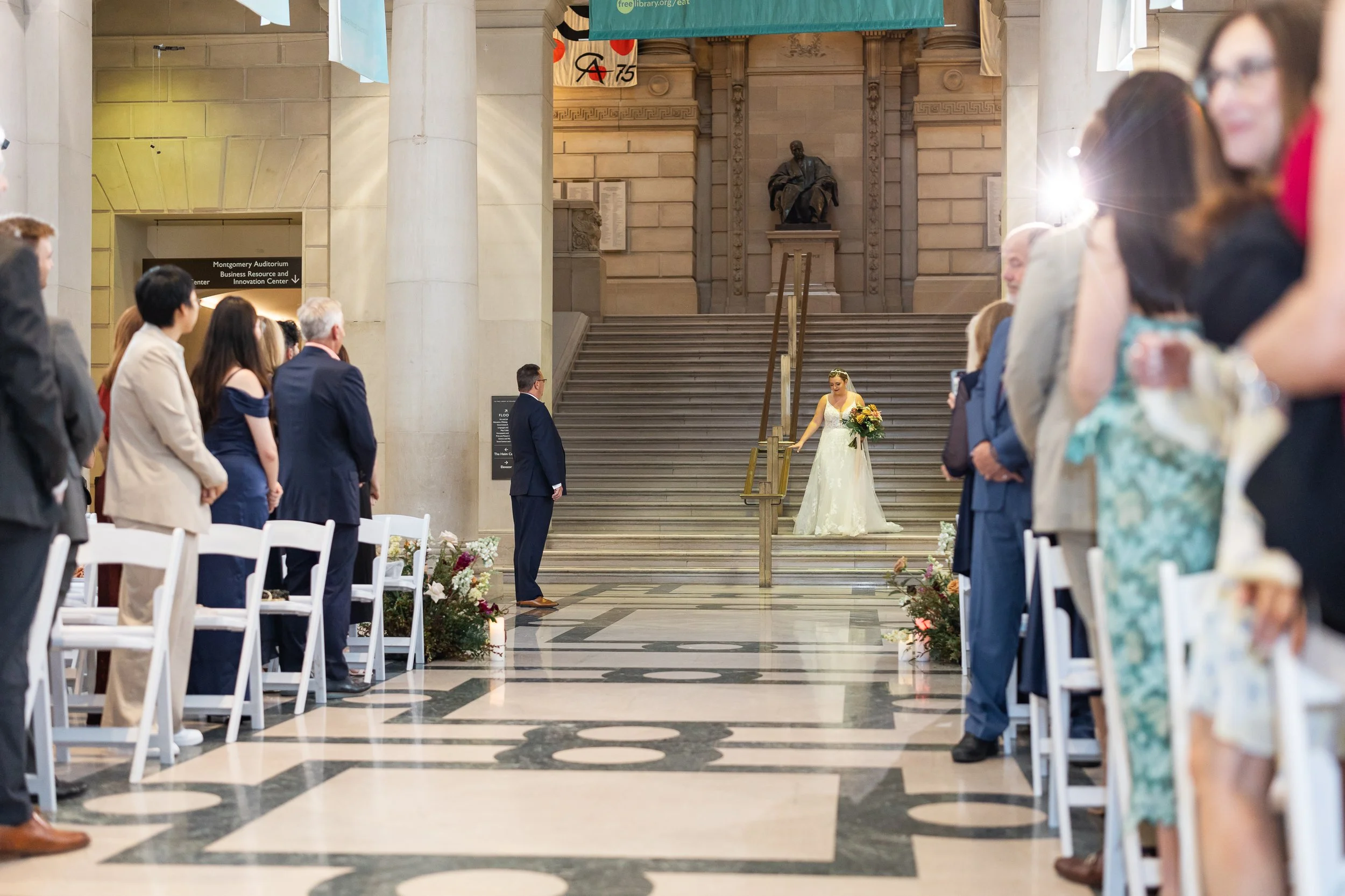
Photo by Rachel Betson Photography
Entering with Someone
A partner may be escorted by one parent, both parents, another family member, a close friend, their children, or anyone else with whom they'd like to share the moment.
Being escorted also doesn't have to mean being “given away.” When you reach the front, your escort can offer a hug, greet your partner, take their seat, or simply step away. If your officiant plans to ask a question such as, “Who presents this person?” make sure that language feels right to you beforehand. A spoken handoff isn't required in Pennsylvania.
Entering Alone
Walking alone can feel confident, simple, and deeply personal. It can also be a meaningful choice for someone who wants a quiet moment to take everything in before joining their partner.
Entering alone doesn't mean no one is supporting you. It simply means you've chosen to experience the walk itself on your own.
Entering Together
Some couples choose to walk into the ceremony together. You might enter side by side down one aisle, approach from opposite sides, or use two separate aisles and meet at the front.
Entering together can feel especially fitting if you want to begin the ceremony as a team or if neither of you connects with the idea of one partner waiting while the other makes the final entrance.
Waiting at the Front
If one partner plans to wait at the front, remember that they still need an entrance.
They may walk down the aisle earlier in the processional, enter from the side with the officiant, arrive with the wedding party, or walk in with a parent or another loved one.
Waiting at the front doesn't have to mean quietly appearing before the ceremony begins. That partner's entrance can still feel thoughtful and meaningful — it simply happens earlier in the processional.
Putting It All Together
The example below shows how one processional might come together, beginning with the officiant and ending with the final partner's entrance.
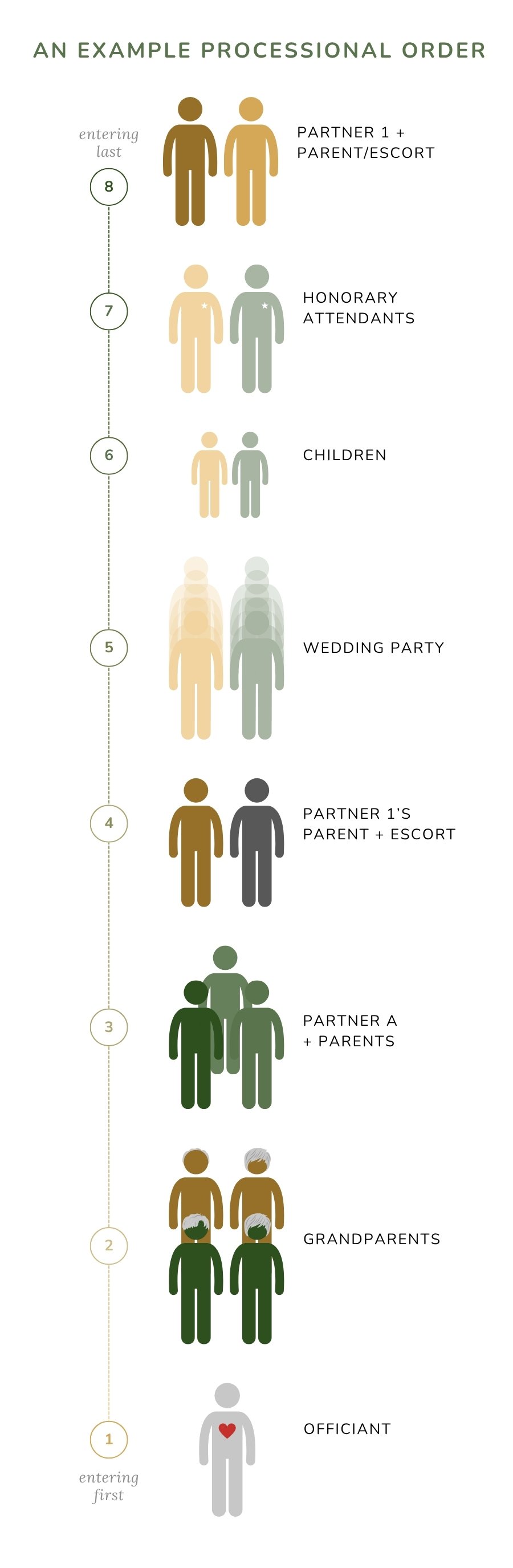
This is only a starting point. Your order may look completely different depending on how each partner enters, which family members are participating, whether the wedding party walks individually or in pairs, and whether children are involved.
The most important thing is that everyone knows three things: when to walk, who they're walking with, and where to go when they reach the front.
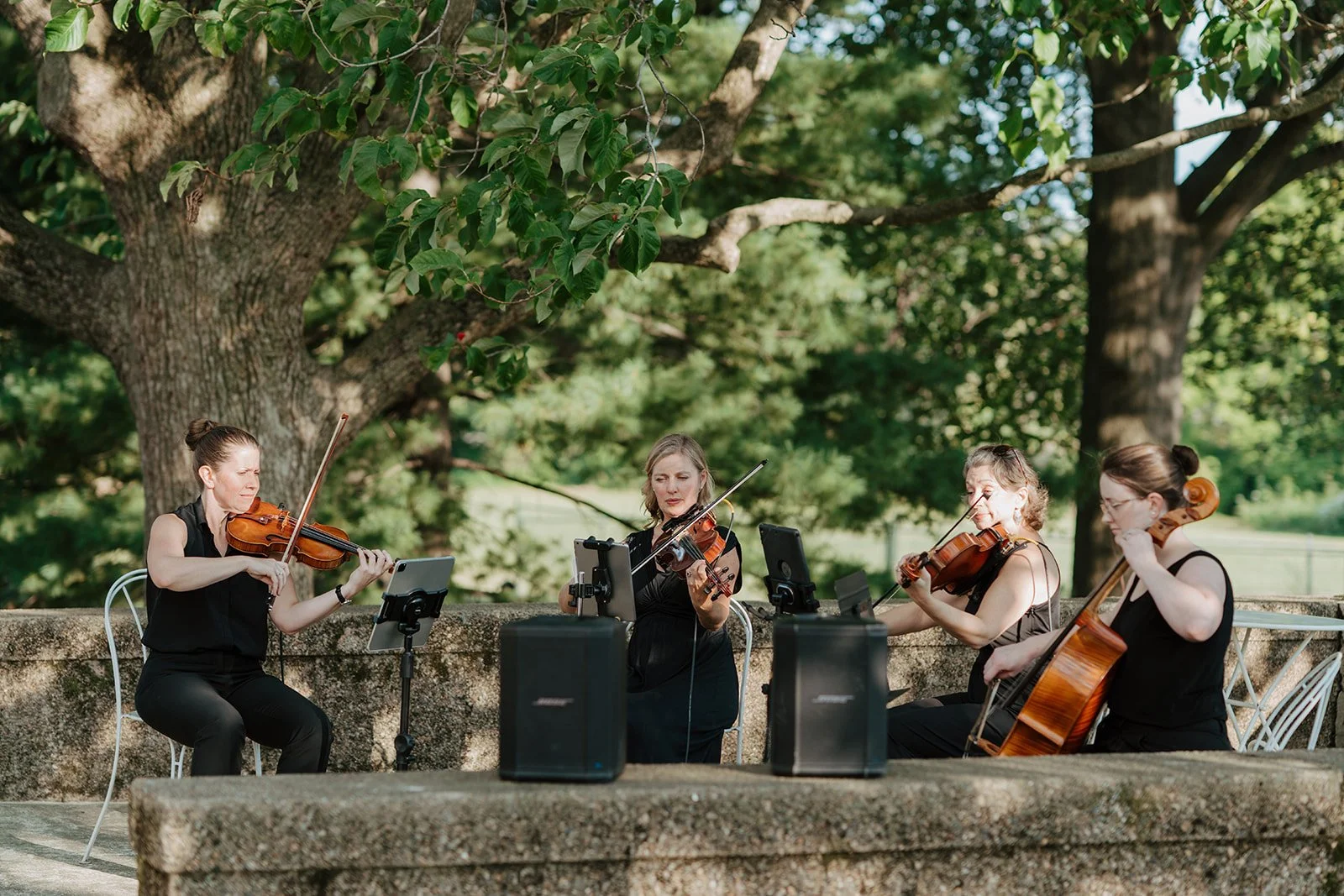
Photo by Emily Palm Photography of musicians from Vivace Live
Processional Music & Timing
You can use one song for the entire processional or choose different songs for specific entrances. The right approach depends on how many people are walking, the length of your aisle, and which moments you'd like the music to distinguish.
Many couples use one song for family members and the wedding party, followed by a second song for the final partner's entrance. Others use one song throughout, select a separate song for each partner, or change the music at another meaningful point in the processional.
Timing Each Entrance
Your ceremony location plays a significant role in timing. A short indoor aisle may take only a few seconds to walk, while a long path, staircase, or uneven outdoor aisle will naturally take more time.
Rather than sending the next person/group as soon as the aisle is clear, leave enough space for each to have their own moment. They don't necessarily need to reach the front before the next entrance begins, but they should be far enough ahead that the processional doesn't feel crowded.
Cueing the Music 🎶
Make sure the person controlling the music knows:
The complete processional order
How many songs you're using and what those songs are
Which entrance triggers each song or transition
Whether a song should begin at a specific point
When the music should end
A planner, coordinator, venue representative, or trusted helper should also cue each person when it's time to walk. Clear visual cues are much more reliable than asking participants to listen for a particular lyric or timestamp — especially when nerves and crowd noise are involved.
Planning Your Recessional
Your recessional begins once the ceremony is officially over. You've been pronounced married, shared a kiss or another celebratory moment, and now it's time for everyone to make their exit.
Anyone standing at the front of the ceremony will typically recess down the aisle. The newly married couple exits first, followed by the Honorary Attendants and the remaining wedding party members, who will typically pair up and exit together.
The officiant usually does not join the formal recessional (though they certainly can). They can simply step aside as the couple and wedding party begin their exit.
Anyone seated during the ceremony has more flexibility. Parents, grandparents, and other VIPs may be included in the formal recessional or exit more informally with the rest of the guests.
Children who sat with a parent or another trusted adult during the ceremony will typically remain with that person rather than rejoining the wedding party for the recessional. If a child stood at the front for the ceremony, they can recess with the rest of the wedding party.
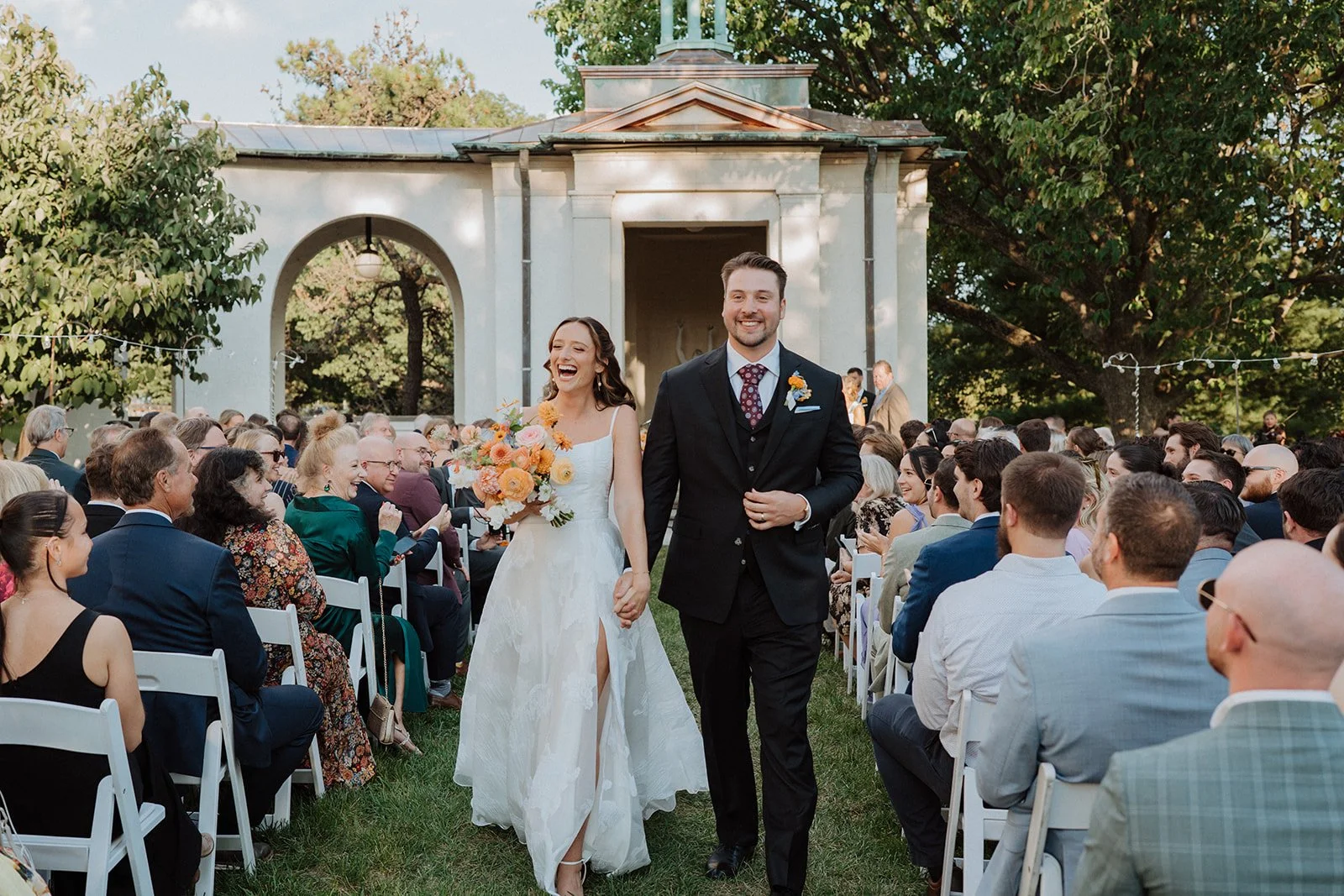
Photo by Emily Palm Photography
Recessional Music 🎶
Your recessional music should begin as soon as the ceremony concludes, usually after you've been pronounced married, shared your first kiss, or another celebratory moment.
Most couples choose one upbeat song for the entire recessional. Having a second one is a good idea if it will take a while to clear the ceremony space, but it’s not really necessary, as people will start chatting with one another as they exit.
Make sure your musicians or DJ know the exact cue to begin playing the recessional song. If your officiant will make a final announcement before you exit, such as asking guests to remain seated or directing them toward cocktail hour, decide whether that announcement happens before (recommended) or after the music starts.
Where Everyone Goes Next
Before the ceremony, decide where the two of you and those participating in the recessional should go after exiting.
Keep walking far enough beyond the aisle to leave room for everyone following behind you. Stopping immediately at the end can quickly create a bottleneck.
You may head somewhere private for a few quiet minutes, gather for family photos, sign your marriage license, or move directly into cocktail hour. The destination matters less than ensuring everyone involved knows the plan and keeps moving until they reach it.
Common Questions
-
The officiant is often the first person to enter. They may walk down the aisle, enter from the side, arrive with a partner who will be waiting at the front, or already be in place before the formal processional begins.
If they’re saying a few words at the beginning about guests not using their phones, make sure that announcement is made before the processional starts.
-
Your officiant can invite guests to stand before a partner's entrance and ask them to be seated once everyone reaches the front.
If both partners are making separate entrances, you can invite guests to stand for both, remain standing after the first partner enters, or stand only for the final entrance. Decide ahead of time so your officiant can guide everyone clearly.
-
No. They can be seated before the ceremony begins, especially if walking the aisle or waiting in the processional lineup would be uncomfortable.
Being seated early does not make their role any less meaningful. It simply allows them to enjoy the ceremony comfortably.
-
Absolutely. Both partners can walk down the same aisle at different points, enter from opposite sides, use separate aisles, or make entirely different entrance choices.
One partner's entrance does not need to feel less significant simply because it happens earlier in the processional.
-
There is no universal number of seconds. The right amount of space depends on the length and layout of your aisle.
Each person or group should be far enough ahead that the processional does not feel crowded, but the next entrance does not always need to wait until they have reached the front. Your cue person can adjust the timing based on how quickly everyone is moving.
-
A rehearsal is especially helpful when you have a larger wedding party, multiple songs, several family members participating, children involved, or a ceremony space with an unusual entrance.
The goal is not to practice every step perfectly. It is to make sure everyone knows when to walk, who they are walking with, and where to go when they reach the front.
Incredible work! You’ve now planned how everyone will enter, where they’ll go, and how they’ll leave once the ceremony is over.
Now that you know where everyone will be and how they’ll get there, it’s time to decide what happens in between.
In Part 3, we’ll walk through the ceremony itself from beginning to end, including the welcome, readings, vows, rings, pronouncement, and the other elements you may choose to include. We’ll also talk specifically about planning a ceremony in Pennsylvania when a friend or family member will be officiating, so they have the structure and context they need to lead the moment confidently.