First things first: being asked to officiate someone's wedding is a pretty big deal.
The couple chose YOU to stand up there with them for one of the most meaningful parts of their day. That's pretty freaking special.
It's also totally reasonable if that honor was quickly followed by, Wait... how do I actually officiate a wedding?!?
Good news: you don't need to suddenly become a professional wedding officiant. There's a reason they asked you. Your personality, your relationship with them, and the way you tell their story are what will make the ceremony feel like theirs.
You just need a little structure to help you get there.
Because you're doing more than reading a script. You're setting the tone for the wedding, guiding everyone through what happens next, and creating the space for the couple to actually get married.
Let's make sure you feel ready to do it.
This is a general framework for a wedding ceremony and doesn't incorporate the traditions or requirements of any specific religion or culture. Those may change the order, wording, participants, or structure considerably. Use this as a starting point, then build from there.
A quick note before we get started:
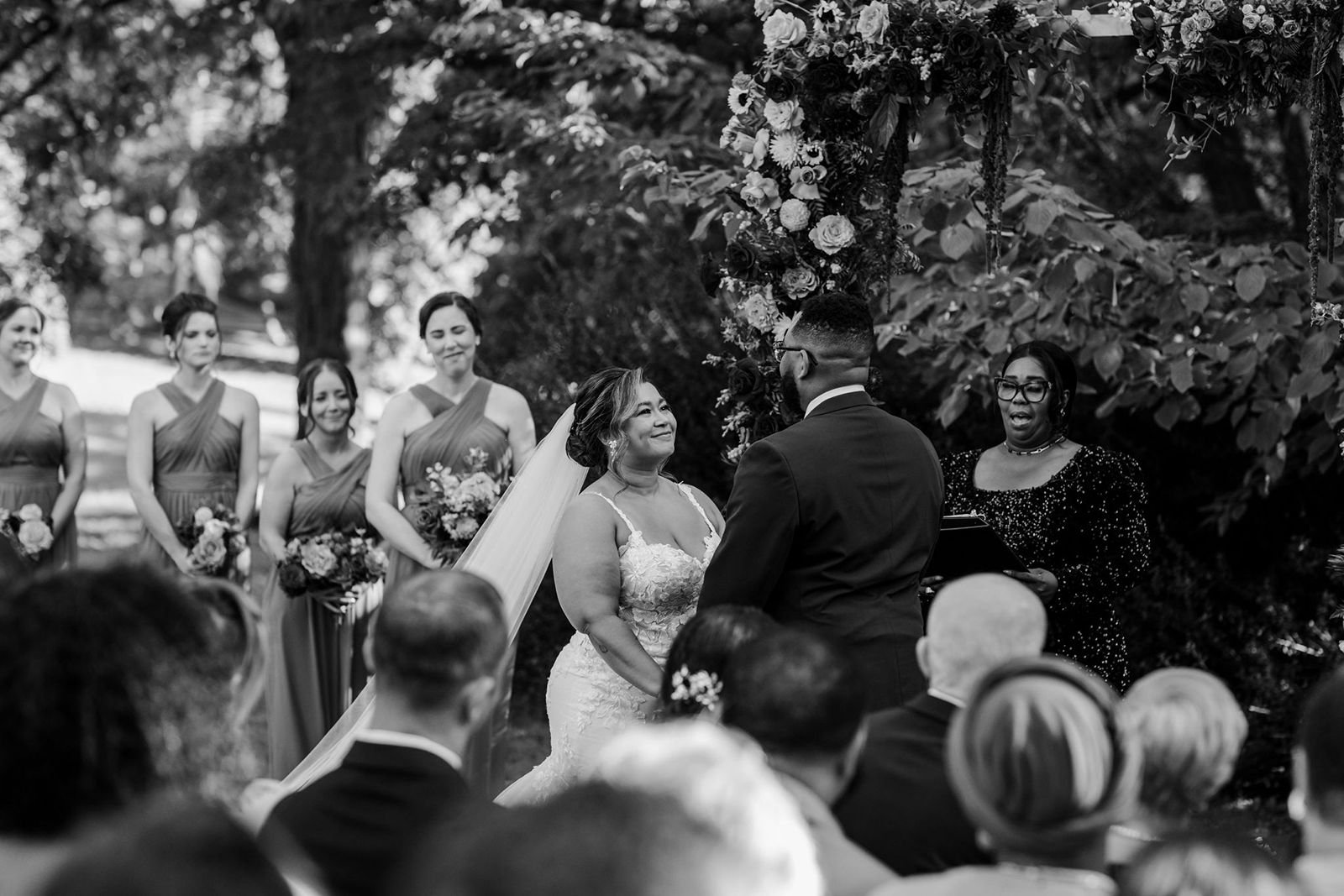
Photo by Brittney raine
Before You Start Writing
Before you start writing the actual ceremony — and I can not stress this enough — have a conversation with the couple about what they want it to feel like.
Sentimental? Lighthearted? Short and sweet? A total laugh fest? A little bit of everything?
You'll also want to know:
About how long should the ceremony be?
Will they be writing personal vows?
Will there be any readings, rituals, or other participants?
Who will have the rings?
Are there any names or pronunciations you need to confirm?
What would they like to review or approve beforehand? What do they want to wait to hear until the wedding day?
Don't forget the legal part.
If you're officiating a wedding in Pennsylvania, don't assume that getting ordained online automatically means you're legally authorized to solemnize the marriage.
It likely doesn’t. 😳 But don’t panic.
The good news? There's another option. Pennsylvania offers a self-uniting marriage license, which allows the couple to legally marry themselves with two witnesses. You can still lead the ceremony exactly as planned, but you aren't acting as the legal officiant.
To be safe, have the couple confirm everything with the county issuing their marriage license well before the wedding day. Then you can get back to the part you're actually here for: creating a really great ceremony.

The Basic Ceremony Structure
Now that you know what kind of ceremony you're creating, let's talk about what actually happens and when.
There isn't one perfect formula, but most ceremonies follow a similar general flow. From there, you can personalize, rearrange, add, or skip pieces based on what makes sense for the couple.
Optional: The Unplugged Announcement
If the couple is having an unplugged ceremony, the announcement should happen before the processional begins.
Once guests are seated and everyone is ready to go, you'll briefly let them know that the ceremony is about to begin. Ask them to silence and put away their phones and cameras, and encourage them to be present for the moment.
Keep it short. Two or three sentences is plenty.
Your final words also serve an important practical purpose: they cue the start of the processional. Make sure whoever is handling the music knows exactly what you'll say so they know when it's go time.
The Processional
Once the music begins, your job is pretty easy: stay put and enjoy it.
The family, wedding party, and couple will make their entrances according to the processional plan.
If you need help figuring out the Processional order, that's exactly what Part 2 of this series covers.
Feeling lost?
When the final partner reaches the front, don't immediately start talking. Give everyone a moment to get situated. Flowers may need to be handed off, clothing adjusted, and the couple may need a second to actually turn toward each other.
Then, your first words are very simple:
“Please be seated.”
Please don't forget this part. 😂 Everyone stood for that final entrance, and they will remain standing until someone tells them otherwise.

Photo by Philip Gabriel Photography
Welcome + Opening Remarks
Now you get to actually welcome everyone.
Thank guests for being there, acknowledge why everyone has gathered, and take a brief moment to introduce yourself and your relationship to the couple. Not everyone there will know who you are or why you're the one standing up there with them.
This doesn't need to be long. A few sentences can easily set the tone and transition into the more personal part of the ceremony.
Tell Their Story
This is where the ceremony really starts to feel like theirs.
Share a little about the couple and their relationship. How did they meet? What brought them to this moment? What do they love about each other? What have they built together? What stories or little details capture who they are as a couple?
And don't try to come up with all of this on your own.
Before you start writing, have a real conversation with the couple. Ask questions about their relationship, favorite memories, what they admire about each other, and what marriage means to them. Take notes. This conversation is where the good stuff comes from.
Then use what you learn to tell their story in a way that feels genuine to them and natural coming from you.
It can be heartfelt. It can be funny. Ideally, it's probably a little of both.
Just remember that you're standing in front of their grandparents, coworkers, and everyone else they invited to their wedding. Don’t make it a roast. And don’t approach it like a toast.
Readings, If You're Including Them
If the ceremony includes a reading or two, it will typically happen here, before moving into the couple's I dos, vows, and rings.
The couple should plan to ask them in advance and send them what they’ll be reading. (Often more of a personal choice vs. something you, the officiant, pick.) Most commonly, it’s a poem or short excerpt. I’ve also seen song lyrics, quotes from movies, or (my personal favorite) “How Falling In Love Is Like Owning a Dog”.
But don't just put the reader's name into the script and hope they'll figure out the rest.
Think through where they'll be sitting, how they'll know it's time to come forward, where they'll stand, what microphone they'll use, and what they'll be reading from.
Introduce them clearly, then pause and let them actually get into place before moving on. When they're finished, give them time to return to their seat before continuing.
The Declaration of Intent (AKA the “I Dos”)
This is the part most people recognize:
“Do you take...”
“I do.”
The declaration of intent and the vows are two different things. The declaration is the couple affirming that yes, they are willingly entering into the marriage. The vows are the promises they make to one another.
The wording can be traditional or fully customized to better reflect the couple. Either way, make it very clear when it's each person's turn to respond.

Photo by m2 Photography
The Vows
Next come the promises.
The couple might write their own personal vows, repeat vows after you, read something they've chosen together, or use a combination of those options.
Whatever they're doing, think through the mechanics in advance.
If they've written personal vows, who has them? Are they in vow books? Printed on paper? Tucked into someone's pocket? Make sure they're where they need to be before the ceremony begins so nobody is searching for them while everyone watches.
If the couple is repeating vows after you, keep the phrases short enough that they can actually remember and repeat them. This is not the time for a 37-word sentence.
And then give them room to have the moment. You don't need to fill every second of silence.
Pro Tip
If the couple is reading something they wrote themselves and you don’t need to do anything for this part, it’s a great time to step aside and let the focus be 100% on the couple.
The Ring Exchange
Before anyone can exchange a ring, somebody needs to actually get the rings to them.
This is where a simple cue makes everything easier:
“May we have the rings?”
Then pause.
Whoever is holding them can step forward or pass them where they need to go. Once everyone has the correct ring in hand, continue with the ring exchange.
The couple may repeat a short phrase after you as they place the rings, or they may simply exchange them without additional wording. Either is perfectly fine, though it feels less awkward if this doesn’t happen in total silence.
The important part is that your script accounts for the action, not just the words.

The Pronouncement + First Kiss
You made it! Time to officially pronounce the couple married.
The exact wording here can vary depending on the ceremony and, of course, the legal arrangement we talked about earlier.
But there is one very important piece of stage direction:
Get out of the way.
Before inviting the couple to kiss, take a few steps to the side so you're not directly behind them in every photo of their first kiss.
Then give them their moment. Let them kiss. Let everyone cheer. You do not need to immediately jump back in with your next sentence.
Presentation + Recessional
Depending on the couple's preference, you may formally present them for the first time before they head back up the aisle.
This could be something traditional, something as simple as “For the first time as a married couple...”, or they may choose to skip a formal presentation altogether.
Once the recessional music begins, the couple heads out first, followed by the wedding party, family, and you according to the plan.
If you're wondering who goes when (or when exactly you're supposed to make your own exit), Part 2 of this series covers the processional and recessional from start to finish.
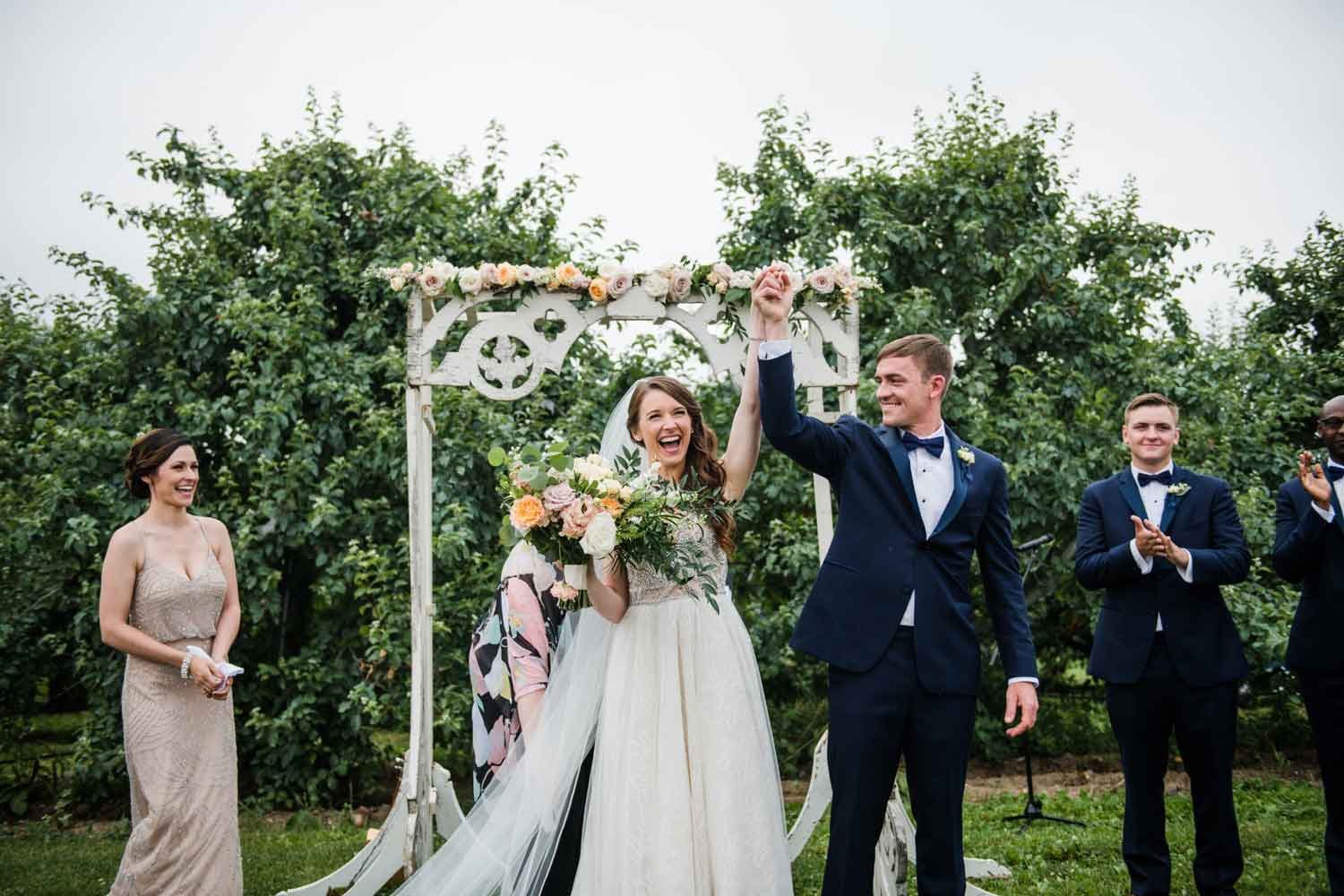
And just like that, you officiated a wedding.
Your Script Is More Than the Words You Say
Remember: you're not just giving a speech. You're guiding everyone through a live ceremony.
So when you're writing your script, include the things you need to do, too.
Add notes like: pause, reader comes forward, wait for rings, step aside…
Make them obvious. Bold them, highlight them, [put them in brackets]. Whatever works for you and how your brain works.
You might think, Obviously I'll remember to step aside before the kiss.
Wedding-Day-You would still appreciate the reminder.
Think About What You're Reading From
You wrote the whole thing. Now let's make sure you can actually read it.
Printed pages in a nice binder or folder are usually a great option. Don’t just hold loose papers. Use a comfortable font size, leave plenty of spacing, and make sure page breaks occur in logical places.
A tablet or device can work, too, but consider screen glare (especially outdoors), notifications, battery life, screen timeouts, random updates, app crashes, and how it will look in photos.
If the ceremony space is a bit on the darker side, think about a clip-on light to keep your script easily visible. Or this is where a backlit tablet is particularly helpful.
The same goes for anyone doing a reading and for the couple's personal vows. Decide in advance what everyone is reading from so nobody is handed a crumpled Post-it note five minutes before the ceremony.
The Microphone Is Your Friend
The guests would very much like to hear this beautiful ceremony you worked so hard on.
If you're using a microphone, keep it close enough to your mouth and resist the urge to turn your head too far side to side when speaking.
If there's a microphone on a stand, stay near it. And if you'll be moving around at any point, make sure you know how that's supposed to work before the ceremony starts.
Also think about everyone else who needs to be heard. How will readers be amplified? What about the couple during their vows?
The DJ, band, or audio team can help with all of this. Listen to them. They know what their equipment needs from you. And if you’re not sure about something, just ask.
Practice It Out Loud
Not in your head. Out loud.
You'll catch awkward wording you never noticed on the page. You'll figure out where you naturally need to pause. You'll learn whether a sentence is way too long to say in one breath.
You'll also find out how long the ceremony actually is.
Practice the names. Practice your transitions. Practice looking up from the page instead of reading straight down into it.
And slow down. Nerves have a funny way of turning everyone into an auctioneer.
Even if you've practiced enough to know the ceremony by heart, bring the script. This is not the day to test your memorization skills.
AND FINALLY…
A Few Things Friend Officiants Commonly Forget
Before I send you off, a few final reminders:
Tell the guests to sit down after the processional.
Give people time to actually do the thing you just asked them to do. Nothing needs to rush during a ceremony.
Look at the couple. Look at the guests. You don't have to stare at your script the entire time.
Don't surprise the couple with a story, joke, or addition they haven't approved.
Make sure the rings, vows, and readings are where they're supposed to be before the ceremony starts.
Know how your microphone works.
Step aside before the first kiss.
Bring your script.
Most importantly, remember that there's a reason they asked you.
You don't need to sound like a professional officiant. You don't need to memorize a perfect speech or suddenly become a completely different version of yourself.
Prepare well. Know the plan. Then when you're standing up there with two people who trusted you with this incredibly important moment, you can stop thinking about what happens next and actually be there with them.
You've got this.