Your Wedding Day Timeline: 6 Places to Build In Breathing Room (So the Day Actually Feels Good to Live Through)
Because a day that looks good on paper isn't the same as a day you'll actually get to be in.
If you're somewhere in the middle of wedding planning right now and you've started looking at sample timelines online — or worse, comparing yours to one you saw on TikTok — let me start here: most couples are doing their best with whatever patchwork of advice they've pulled together, and however your day actually unfolds, it's going to be okay.
Real talk: there is no single correct wedding day timeline. There's no perfect schedule that, if you follow it exactly, guarantees the day will feel the way you're hoping it will. The internet wants you to believe there is. (There isn't.)
But if you're still in the planning phase and you have time to make a few tweaks, there are a handful of spots in a typical wedding day timeline where things tend to get tight. A little extra breathing room in those specific places makes a really big difference. Not because you're getting it wrong. Because the standard advice you're reading just isn't honest about how long things actually take.
Here's the thing: a wedding day scheduled minute-to-minute from 6am to midnight might look impressive on paper, but it's genuinely hard to live through. When every transition is scheduled tight, the day becomes something you're constantly chasing. And the worst part is that an over-scheduled day always feels like it flew by, because there's no room to actually be in any of it.

Your wedding day shouldn't just look good on paper. It should feel good to live through.
So below are the six spots I see timelines get tight most often, walked through in the order they'll show up on your day. None of these are catastrophic if they're tight. But all of them are easier to fix now, while there's still time.
1. Hair and Makeup (and Getting Dressed) Almost Always Need More Time
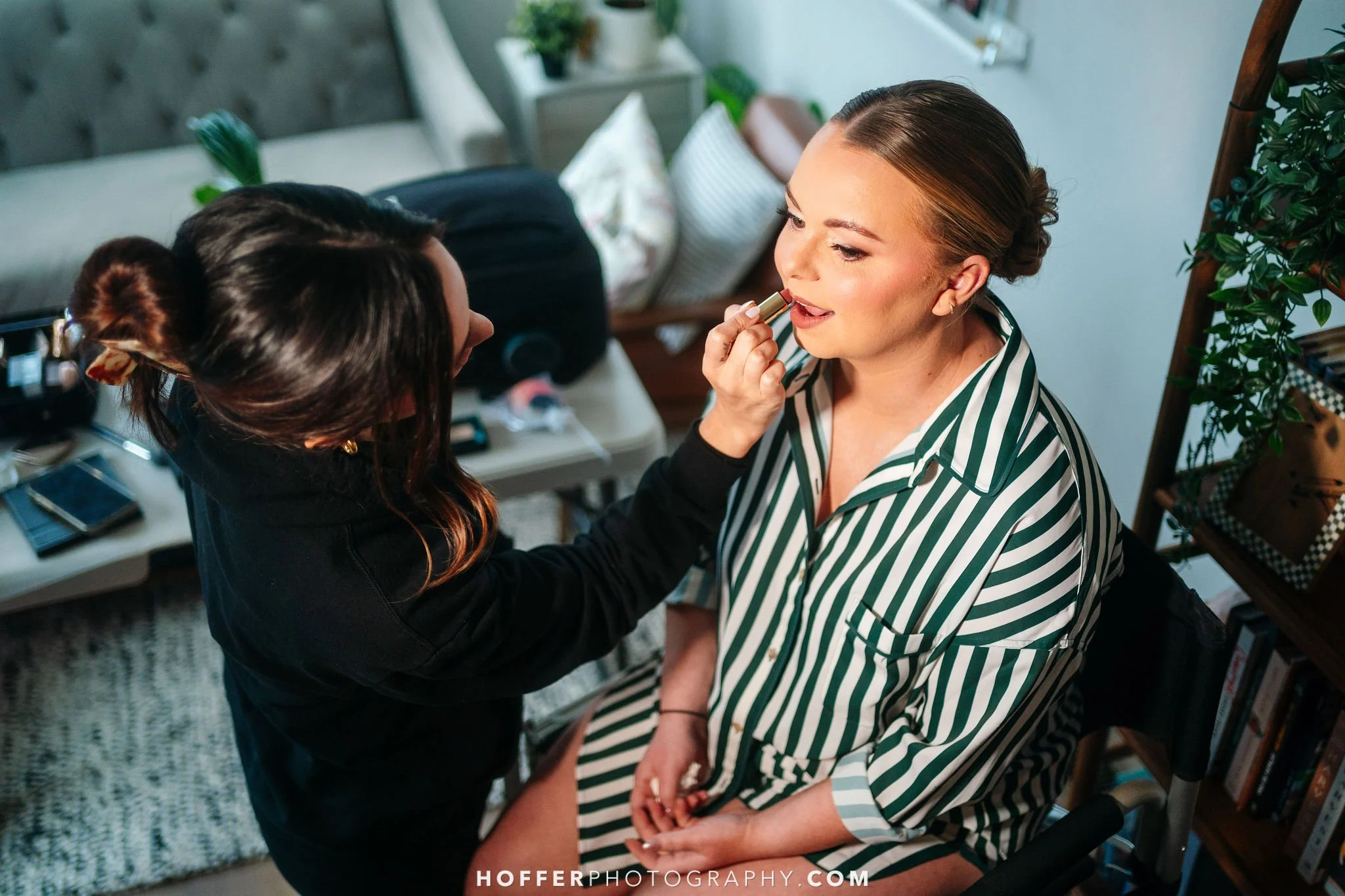
Photo by Hoffer Photography
This isn't anyone's fault — it's the nature of the work. Hair and makeup is deeply personal, and if someone (especially the person getting married) isn't 100% happy with how their hair turned out or how their makeup is feeling, of course they're going to want fixes. That takes time. And it should.
What people forget is that no one walks from the makeup chair straight into the dress. There's eating something. Using the bathroom. Reapplying deodorant. Getting into the Spanx. Putting on jewelry, finding the second earring, doing the actual zipping or buttoning or tying. Even if the garment itself only takes three minutes to physically put on, the full transition from "almost ready" to "actually ready" usually takes 20 to 30 minutes.
Build a real cushion between when hair and makeup ends and when photos or first looks begin. Not five minutes. More like 30.
A few things that help:
Schedule H&M to finish at least 45 minutes before you need to be "ready." Not 15. Not 20. Forty-five.
Designate someone to help with the practical stuff. Someone who can grab water, hand you a snack, find the missing earring, and zip the dress while you stay calm. (They should be dressed BEFORE you.)
Treat "getting dressed" as its own block on the timeline. It is not part of hair and makeup. It is not part of photos. It's its own thing, and it needs its own time.
2. You Will Forget to Eat. Plan For It Anyway.

Photo by Hoffer Photography
One of the strangest things about a wedding day is that all of your normal hunger cues (the ones that have been running your life since you were born) go right out the window. The excitement, the adrenaline, the anticipation — they override everything. You can be twelve hours into the day and not realize you haven't eaten since breakfast.
This is why so many people end up shaky, lightheaded, or kind of weepy by the time cocktail hour rolls around. They haven't eaten and they have no idea.
The fix isn't a big meal. It's small bites, consistently, throughout the day.
A handful of trail mix while you're getting ready. Half a sandwich before photos. A few crackers between the ceremony and cocktail hour. Tiny inputs that keep you steady.
A pro move: assign someone in your wedding party as the official snack person. Their actual job is to keep food (and water) in front of you all day, especially at the moments you'd never think to ask for it yourself. By the time everything settles and you finally get to your table at dinner, you'll be glad you're not running on a sip of champagne and pure adrenaline.
3. Travel Time Is Almost Never Just the Drive
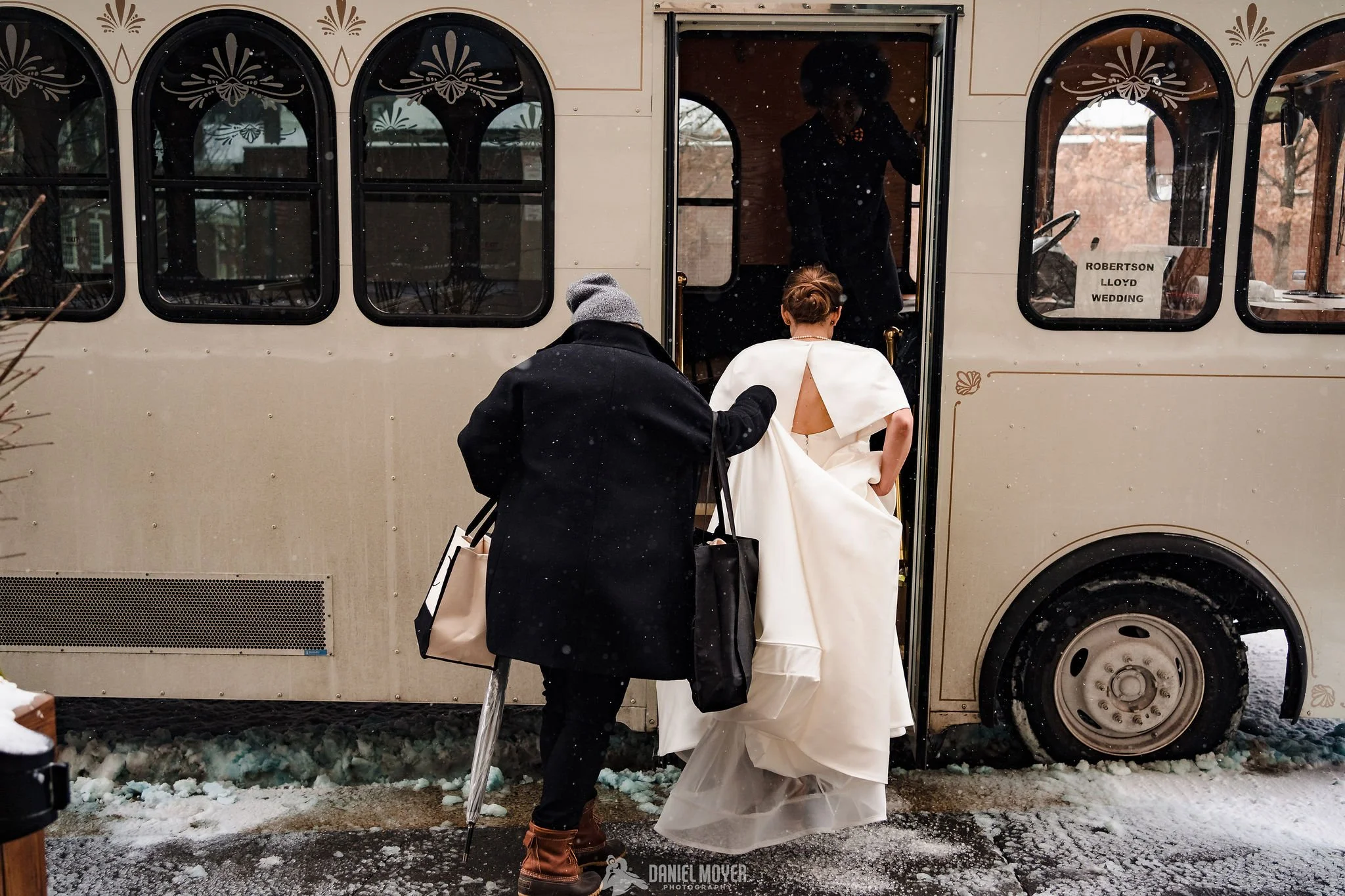
Photo by Daniel Moyer Photography
If your photos wrap at 3pm and there's a 15-minute drive to the venue, you do not have 15 minutes. You have a drive, plus gathering everyone's belongings, plus loading vehicles or hailing Ubers, plus unloading at the next spot, plus a bathroom break, plus getting your dress and your veil and your bouquet situated again. Somewhere in there, someone is going to need to text the photographer about something or fix their hair in a car mirror.
Pad your travel windows. A 15-minute drive needs a 30 to 40-minute travel block. A 30-minute drive needs an hour.
The cost of padding is small. A few extra minutes of standing around, maybe. The cost of not padding is rushing, stressing, and arriving somewhere flustered, which then bleeds into the next part of the day.
4. Put a Guest Arrival Time on Your Wedding Website (and It's Not the Invite Time)
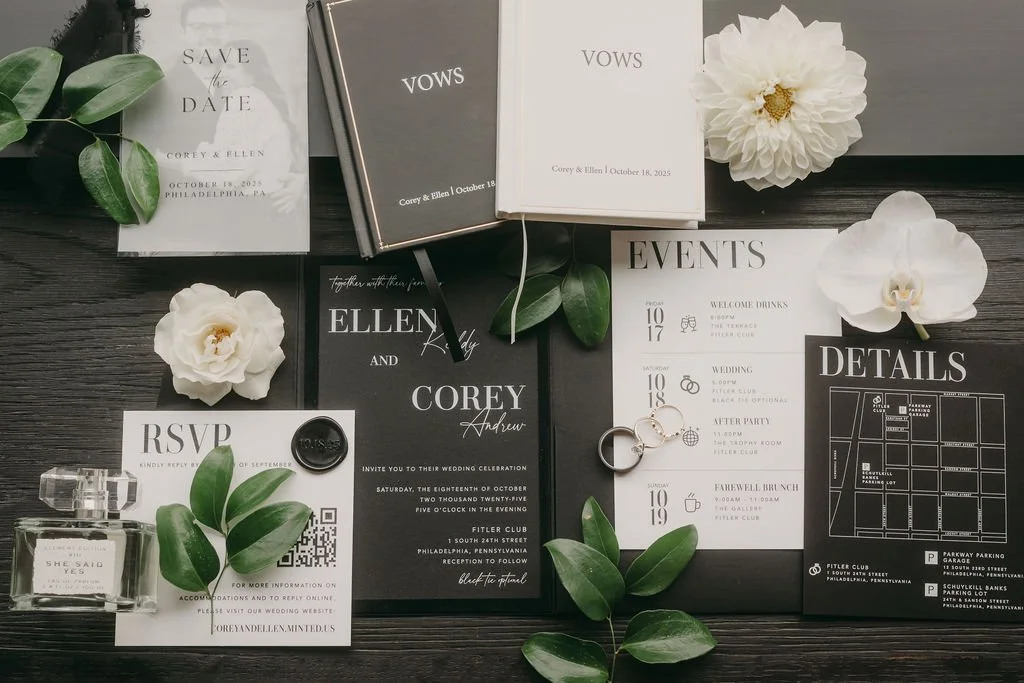
Photo by Pat Robinson Photography
This one's small, but it solves a problem most couples don't realize they have.
If the only time information your guests have is your ceremony start time, here's what tends to happen: they cut it close. They show up at the ceremony time, or just after — walking in while you're walking down the aisle, hunting for a seat, and disrupting everyone else who actually planned ahead.
The fix is simple: add a "guest arrival" time to your wedding website. Make it 30 minutes before your ceremony actually starts.
If your ceremony begins at 5:00, your wedding website tells guests "please plan to arrive by 4:30." The invitation still lists the actual ceremony time of 5:00. Now your guests have both pieces of information: 4:30 is when to get there, and 5:00 is when things actually start (read: if I'm not in my seat by then, I'm missing it).
One important note: the guest arrival time should only live on your wedding website. Don't put it on the invitation in place of the ceremony time, or guests will assume that's when the ceremony begins and end up showing up an hour early — finding the space half-set, and quietly wondering if you're the one running late.
Small change. Real difference. Your guests get clear guidance, and your ceremony actually starts on time.
5. Family Photos Take Longer Than the Internet Will Tell You
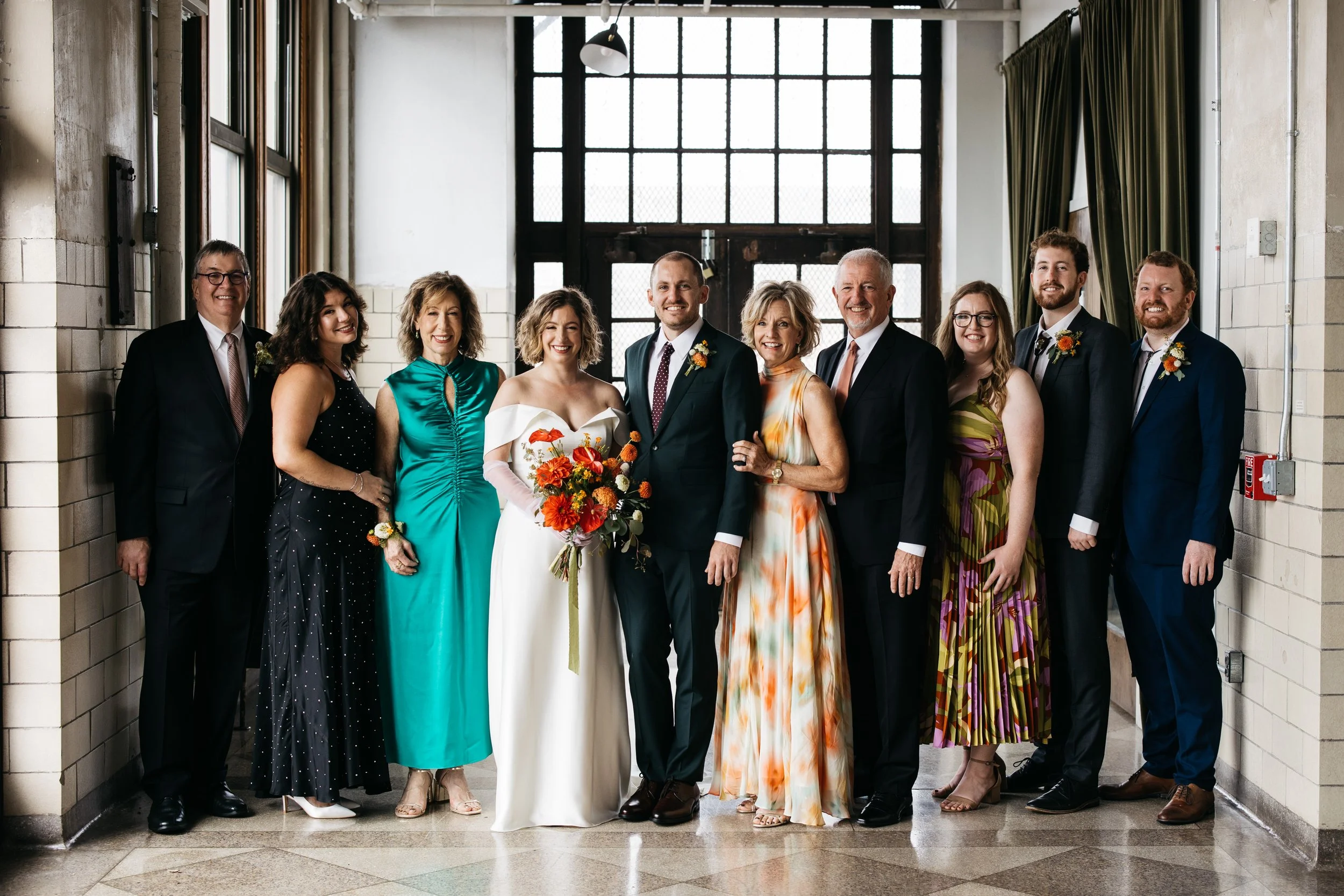
Photo by Peach Plum Pear
Couples write down "15 minutes for family photos" all the time, and I get it — that's what the sample schedules online suggest. But 15 minutes only works if every single person on the shot list is in position, paying attention, has used the bathroom recently, and is mentally locked in.
In reality, family photos take time because people take time. Aunt Linda is mid-conversation with cousin Steve and didn't hear her name called. The kids need snacks. Grandma needed the bathroom right when she was supposed to be in frame. Someone wandered off looking for water. Each grouping realistically takes 2 to 3 minutes once you account for the actual human shuffle of getting people in and out of the photo.
Count groupings, not minutes. If you have 10 groupings on your shot list, that's 25 to 30 minutes, minimum.
A quiet brag moment:
Getting through family photos quickly and warmly — without making grandma feel like she's being herded — is genuinely one of the things I'm best at. It takes knowing when to be gentle, when to be firm, and when to just go grab Uncle Mike yourself. When I'm part of your day from booking forward (which is what Signature Coordination is), family photo time is one of the places where having me on-site really shows up.
6. Plan First Dances and Toasts at 5 Minutes Each, Not 3
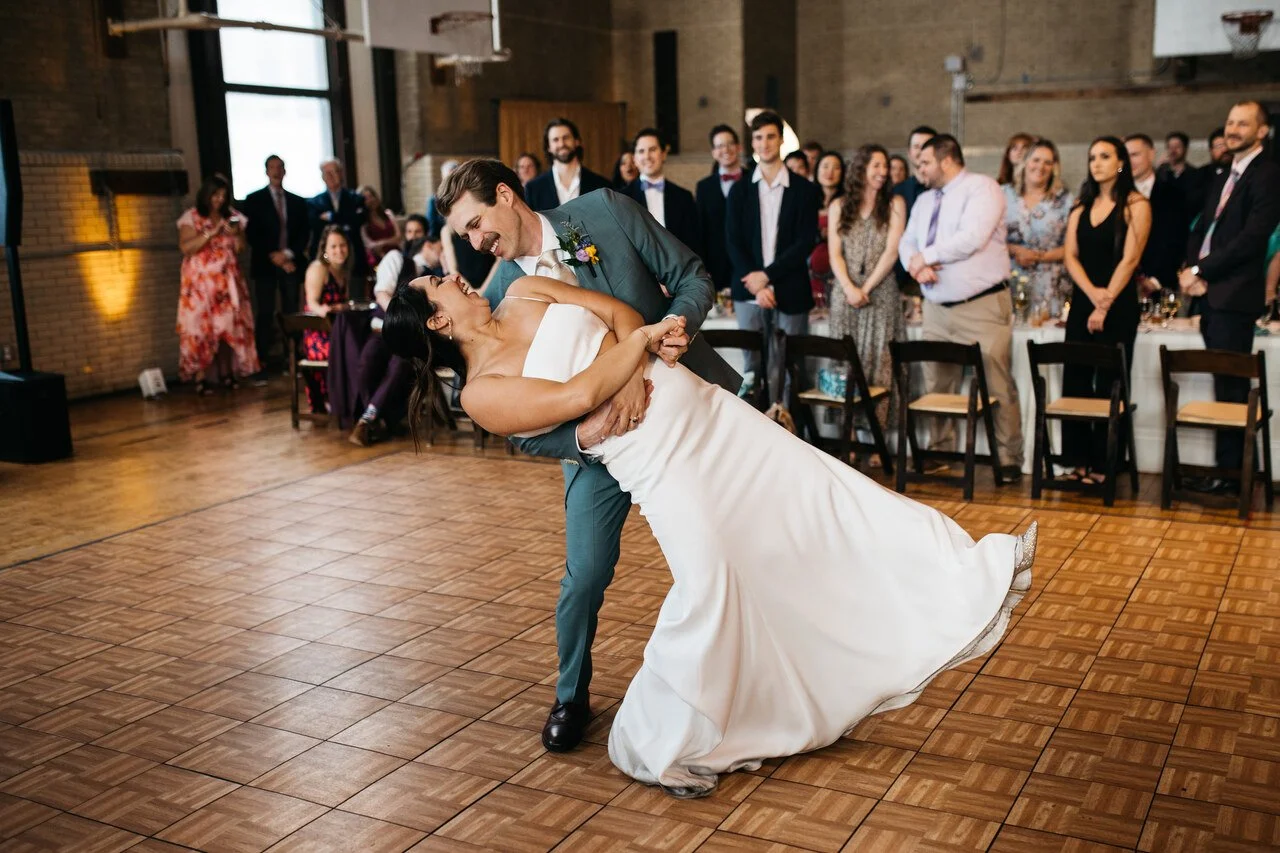
Photo by Peach Plum Pear
Ideally, a couple’s first dance is under 3 minutes. A toast under 3 minutes. In a perfect world, everything stays tight.
But Dad is probably going to go for at least 4 minutes once he gets going. The maid of honor is going to get a little emotional and slow down halfway through. And that's fine. Those moments are part of what makes the day feel real.
Plan each “short” formality at 5 minutes. That buffer absorbs the natural delays without throwing off the catering team or pushing dinner courses out of sync. If everything actually runs short, great — you've got bonus dance floor time. If things stretch, no one's panicking behind the scenes about wilting salads or cold entrées.
A Wedding Day Built for Living, Not Just Looking
If you take nothing else away from this post, take this:
A wedding day that feels good is more important than one that just looks good on paper.
A perfectly engineered schedule that doesn't let you breathe will feel like a sprint. A slightly looser one — with breathing room baked into the moments that always need it — gives you a chance to actually be in your day.
You're not going to remember the timeline. You're going to remember the way it felt (and so are your guests). Whether you had time to look around at the people you love. Whether you got to eat. Whether you ended the day exhausted-in-a-good-way, or exhausted because the logistics were running you.
That distinction — between a day that looks good on paper and a day that feels good to live through — is essentially the reason I built Signature Coordination the way I did. It's not about the perfect timeline. It's about working with couples from the very beginning, so the day actually serves you, not the other way around.