Creative Ways to Keep Kids Entertained at Your Wedding (Without a Kids’ Table)
When couples talk about guest experience, the focus is usually on the adults: good food, a great bar, comfortable seating, and a solid dance floor. But if kids are on your guest list, they’re guests too — and when they’re thoughtfully considered, everyone has a better time.
This isn’t about turning your wedding into a birthday party or forcing “kid stuff” into moments where it doesn’t belong. It’s about being intentional. When kids feel included (and not bored out of their minds), parents can actually relax, stay longer, and enjoy the celebration right alongside them.
That’s a win for literally everyone.
And before we go any further, I’m just going to say it: no kids’ tables.
Yes, they sound fine in theory. But in practice they usually require a very unlucky adult to supervise, troubleshoot meltdowns, cut up veggies, and referee disagreements. Not exactly a great guest experience.
Instead, here are some creative, thoughtful ways to keep kids engaged — without separating them from their families or sacrificing the overall vibe of the day.

Photo by Hoffer Photography
Interactive Activities That Feel Intentional
Wedding Activity Kits (but make them elevated)
Skip the generic crayons-on-the-table approach. Think small activity kits that feel curated and age-flexible:
Coloring pages inspired by your venue or city or wedding theme
Stickers, mazes, or simple games
Mini notebooks for doodling or “wedding notes”
A disposable camera and scavenger hunt for them to find and photograph fun elements of the day
Pro tip: Place these at kids’ seats during dinner or cocktail hour so they’re a discovery — not a distraction.
Lawn Games or Casual Play Stations
If your venue has outdoor space, classic lawn games can be a huge hit for kids and adults. Cornhole, giant Connect Four, or ring toss give kids a playful outlet without requiring constant supervision.
(It also gets their bodies moving, which after sitting through a 30+ minute ceremony, is a GREAT idea.)
Creative Corners instead of Craft Chaos
A small, designated creativity station — think drawing, bracelet-making, or building with blocks — lets kids engage at their own pace. No announcements, no structured timeline. Just a place they can wander to when they need a break from the adult stuff.
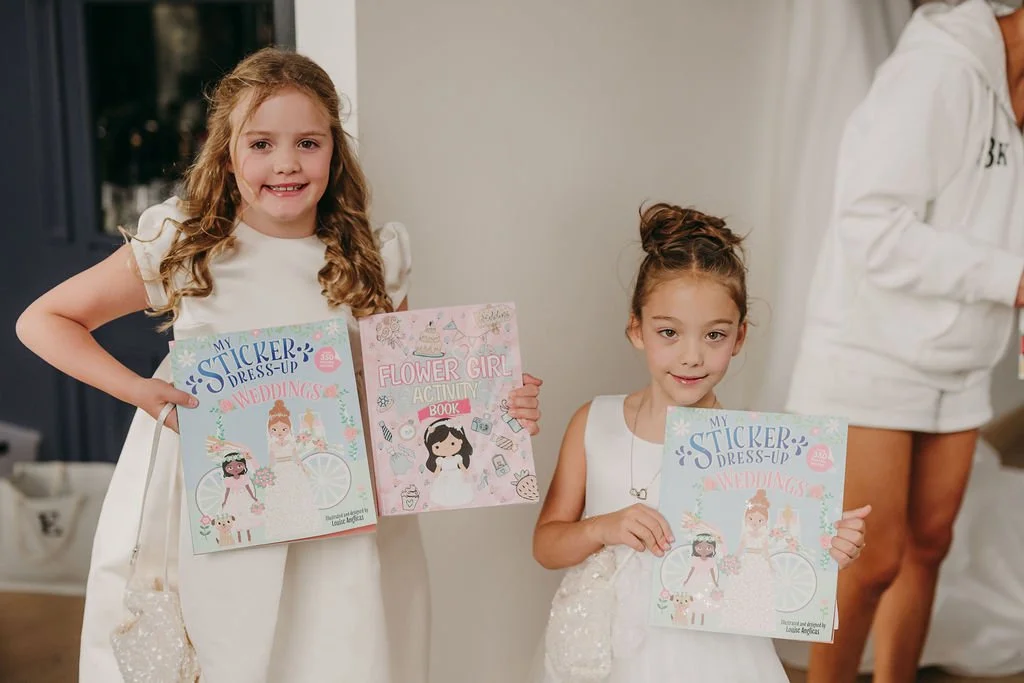
Photo by Pat Robinson Photography
Quiet Zones: Because Not Every Kid Wants to Dance
Some kids love the dance floor. Others hit their limit fast—and that’s okay.
Lounge-Style Quiet Areas
Create a cozy corner with soft seating, pillows, or rugs where kids can decompress. This works especially well during dinner or later in the evening. (And those introverted adult friends will love it, too!)
Movie or Story Nook
A small room or tent with a movie playing (with headphones) can be a lifesaver. It gives kids a way to reset without leaving the celebration entirely — and parents can still be nearby.
Books, Puzzles, or Calm Games
Not everything needs to be high-energy. Quiet activities help kids regulate themselves, which means fewer meltdowns and smoother transitions throughout the night.

Photo by Pat Robinson Photography
Let Kids Be Part of the Day (Without Forcing It)
Inclusive Moments, Optional Participation
Maybe kids hand out programs, toss petals, or are invited to dance early in the night. The key word is optional. When kids are invited — but not pressured — they’re more likely to engage positively.
Thoughtful Timing Matters
If you know your crowd includes a lot of families, consider an earlier ceremony start or a dinner schedule that works with younger guests’ routines. These small choices make a big difference.
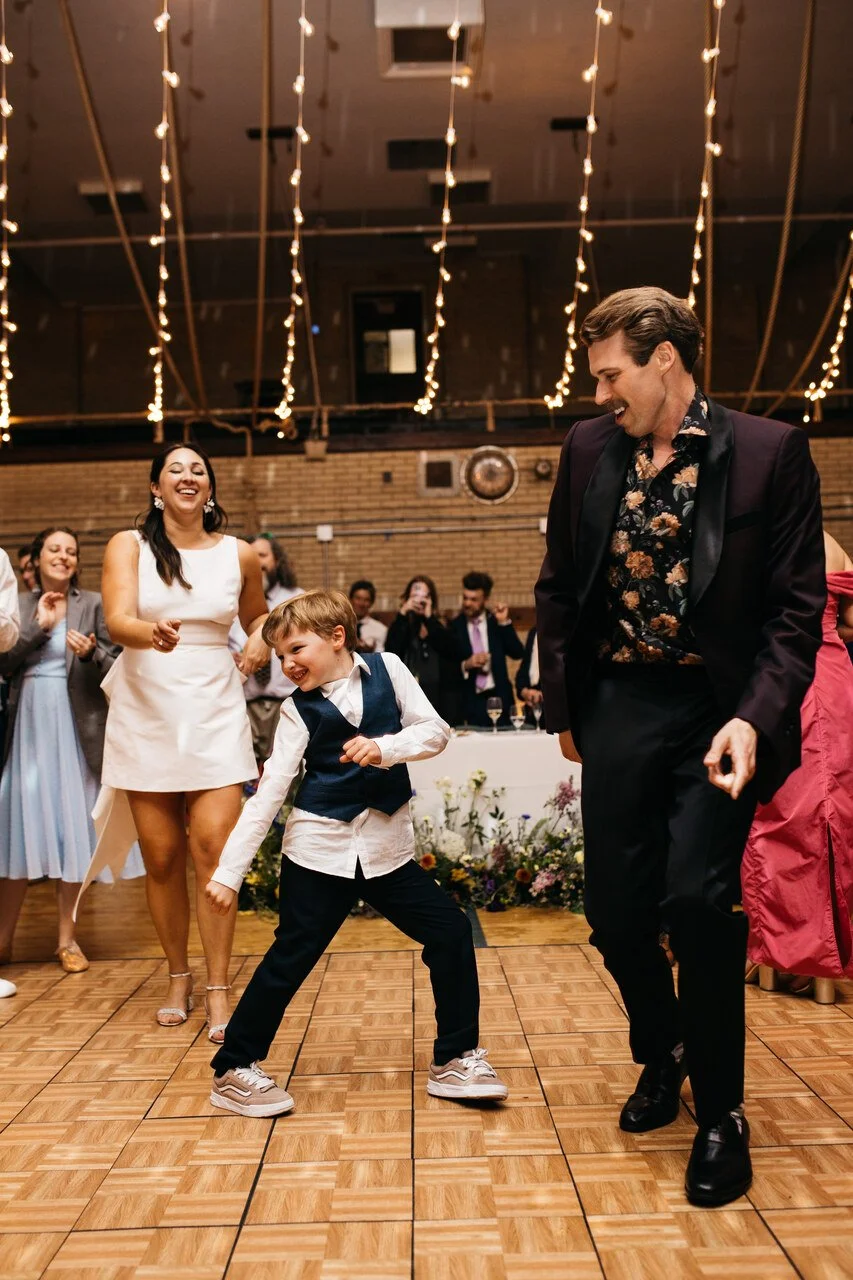
Photo by Peach plum pear Photography
Consider On-Site Childcare (a Game Changer for Everyone)
If your guest list includes multiple families — or kids across a wide age range — hiring one or two professional babysitters can be one of the most thoughtful decisions you make.
This looks less like “childcare” and more like creating a supervised kids’ lounge in a nearby room or separate space on-site.
The key difference? These sitters are not also wedding guests.
Their sole responsibility is the kids.
What that allows:
Someone to manage movies, games, and activities
A calm, capable adult to handle conflicts or overstimulation
A safe place for kids to take breaks without fully leaving the event
For parents, this is huge. They can check in on their kids easily, enjoy cocktail hour or dinner without constant worry, and actually stay present for the celebration.
For kids, it provides structure without pressure. They can come and go, engage when they want to, and decompress when they need to.
And for you? It removes the awkward expectation that one adult at a kids’ table is somehow responsible for supervising everyone. (Because that’s never actually fair—or effective.)
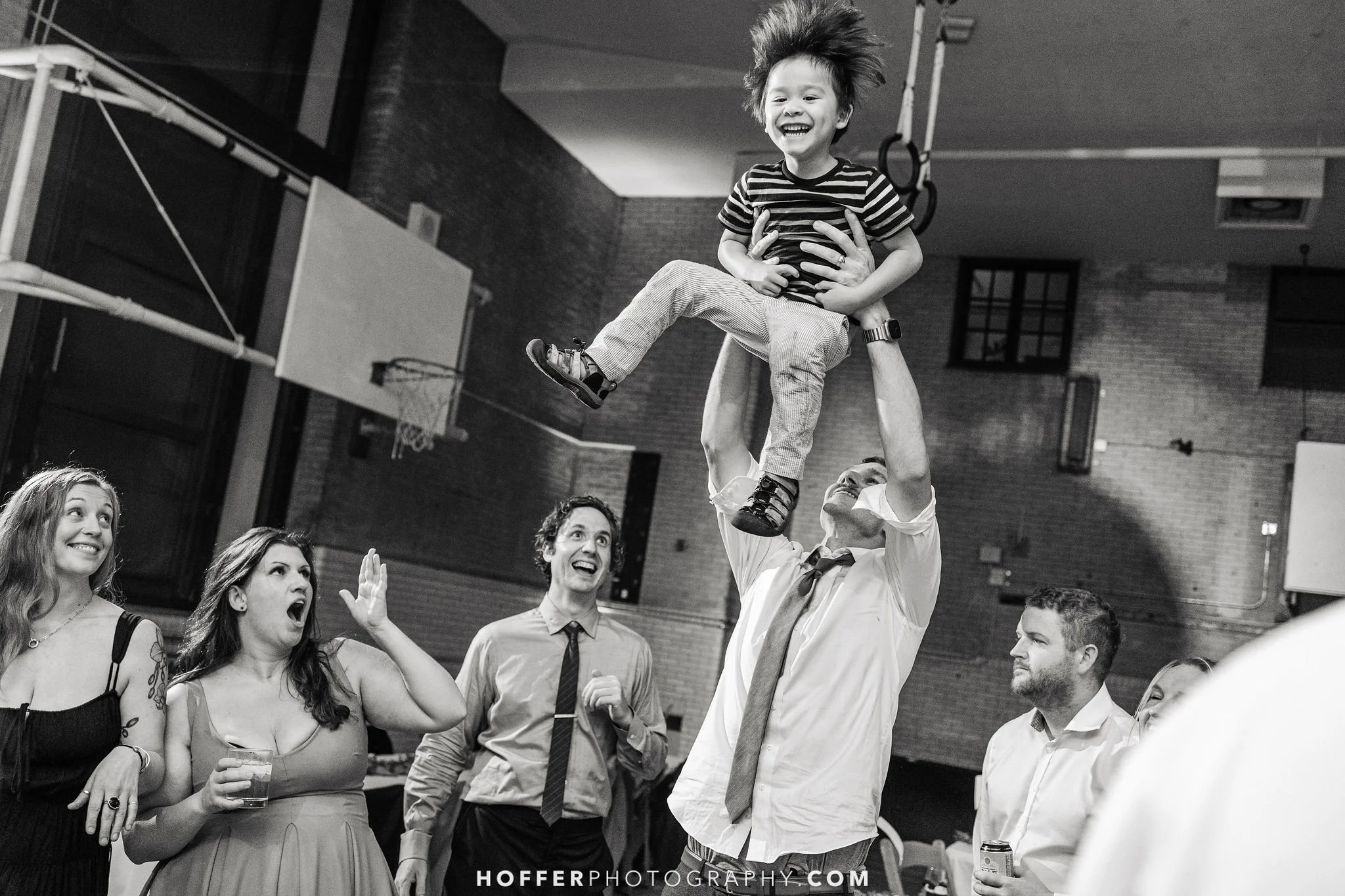
Photo by Hoffer Photography
Why This Actually Benefits the Adults
Here’s the thing: this isn’t just about the kids.
When children feel considered, parents aren’t constantly:
Leaving the table to manage boredom
Rushing through dinner
Debating whether they need to leave early
Instead, they get to be present. They stay longer. They dance more. They enjoy themselves — because their kids are happy, occupied, and not treated like an afterthought.
That’s good hosting.
A Thoughtful Wedding Is One Where Everyone Feels Welcome
Designing a wedding that works for all your guests — kids included — doesn’t mean compromising your vision. It means thinking ahead, being intentional, and understanding how different people experience the day.
If you’re planning a wedding in the Philly area and want help creating a celebration that feels elevated, inclusive, and genuinely enjoyable for everyone in the room, I’d love to chat. Thoughtful planning makes all the difference — and your guests (of every age) will feel it and remember it.